.png?width=2060&height=582&name=Hirsch%20(%20justified).png "Hirsch ( justified)")
%20wht.png?width=2060&height=582&name=Hirsch%20logo%20(justified)%20wht.png "Hirsch logo (justified) wht")

Tajima Embroidery Machine Review: How Shark Creek Graphics Scaled Their Embroidery Business
Shark Creek Graphics started as a small side hustle in a backyard shed, helping the Combat Veterans Motorcycle Association® with patches, apparel,...
9 min read
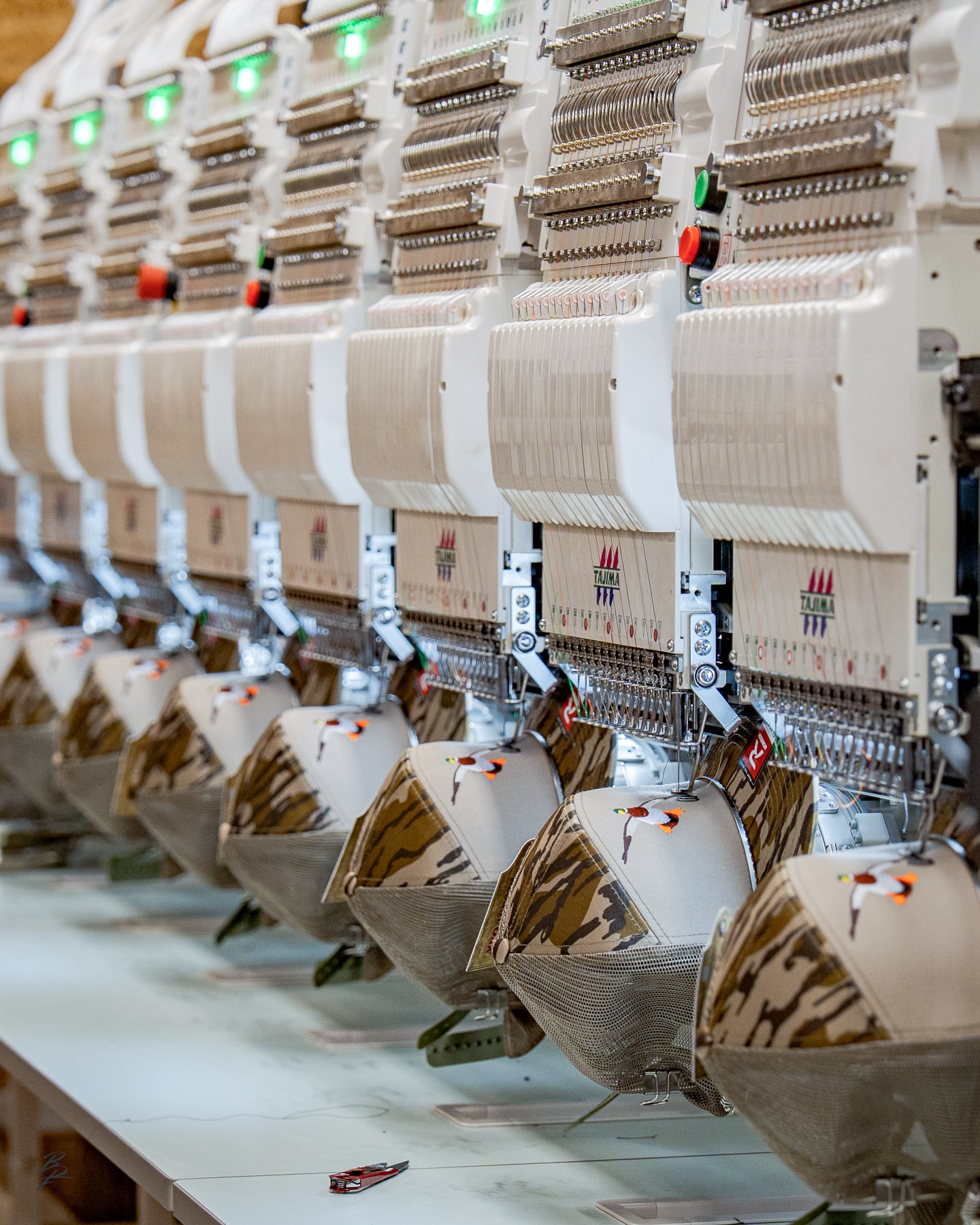
East Coast Waterfowl started as a simple Instagram page, created to share hunting experiences and connect with others who shared a passion for the outdoors. What began in 2013 as a way to showcase waterfowl hunting on the East Coast quickly grew into something much bigger — a loyal community, a recognizable brand, and eventually a full-scale apparel business. Today, alongside ventures like Birdshot Branding, East Coast Waterfowl produces a wide range of hats, apparel, and custom products, all rooted in authenticity and the lifestyle that built it. With the addition of in-house embroidery powered by Tajima equipment, the brand has gained greater control over quality, speed, and scalability. In this blog, we take a closer look at the journey, the evolution into production, and how the right equipment helped fuel the next stage of growth.
The Story Behind East Coast Waterfowl
How a simple Instagram page turned into a thriving apparel brand, and the passion for the outdoors that built its foundation.
From Content to Commerce: Building Multiple Brands
The evolution into Birdshot Branding and East Coast Angler, and how each brand supports growth, creativity, and community.
Why Bringing Embroidery In-House Changed Everything
The challenges of outsourcing, the decision to invest in Tajima, and how greater control improved quality, speed, and scalability.
Inside the Tajima Setup: Powering Production
A look at the TMEZ multi-head setup, key benefits like consistency and reliability, and how it transformed day-to-day operations.
Scaling the Business with Confidence
“It wasn’t just about buying a machine — it was about investing in the long-term future of our business.”
East Coast Waterfowl didn’t start as a business—it started as a passion.
Founded in 2013 in Willow Springs, North Carolina, the brand began as a simple Instagram page showcasing duck hunting experiences on the East Coast. Within a year, it grew to over 10,000 followers, fueled by authentic content and a tight-knit community of hunters and outdoor enthusiasts.
As demand grew, so did the opportunity.
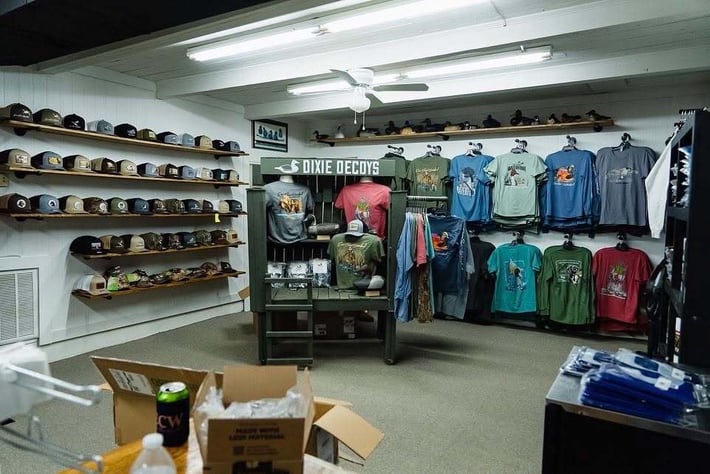
What started as custom hats and shirts for friends quickly turned into a full-fledged apparel brand. That momentum led to the creation of Birdshot Branding, the company’s custom apparel and production arm, and later East Coast Angler, expanding into the coastal fishing lifestyle.
Today, these brands operate as a connected ecosystem:
But scaling production came with challenges.
1. Can you tell us the story behind East Coast Waterfowl — how it started and what it’s grown into today?
"East Coast Waterfowl started on November 14th, 2013 in Willow Springs, North Carolina. At the time, it was really just an Instagram page I created to share hunting pictures and experiences with friends. I never expected or intended for it to become a business. I just enjoyed duck hunting and wanted to showcase what waterfowl hunting looked like here on the East Coast.
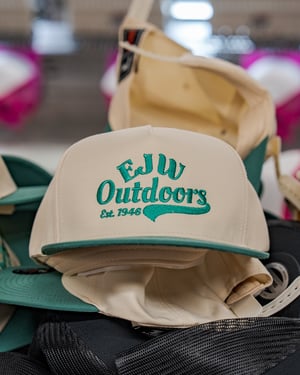
Within the first year, the page grew to over 10,000 followers and I added our first group of pro-staff members, most of them close friends who shared the same passion for hunting and conservation. Around that same time, I designed our first logo and started making hats and shirts for friends and family. Once people started seeing the gear in our hunting photos, they began asking where they could buy it.
At first, I was taking orders through email and social media. Not long after that, I built a simple website and things really started to grow from there. Over the years, East Coast Waterfowl evolved from a small hunting page into a full apparel brand with a strong community behind it. Today we offer a large variety of hats, apparel, and custom products while still staying true to the roots of the brand and the people who supported it early on."
2. How did your apparel brands, including Birdshot Branding and East Coast Angler, come into play?
"Birdshot Branding came naturally from East Coast Waterfowl. Once people saw the hats and apparel we were creating for our own brand, businesses and other organizations started asking if we could make products for them too. What started as helping a few local companies turned into a full custom apparel and branding business.
East Coast Angler came later as another extension of the lifestyle side of the brand. A lot of our audience enjoys both hunting and fishing, so it made sense to create something focused around coastal fishing and that side of the outdoors lifestyle.
All three brands really feed off each other. East Coast Waterfowl helped build the audience and creativity behind the products, while Birdshot Branding became the production and custom branding side of the business."
3. Who is your core audience, and what makes your brand resonate with them?
"Our audience is made up of people who genuinely enjoy the outdoors and appreciate authentic brands. A big part of our customer base is hunters, fishermen, blue-collar workers, and people who simply enjoy the lifestyle that comes with being outdoors.
I think what resonates most is that the brand was built naturally. Nothing about it was manufactured or forced. The people wearing our gear are the same type of people we grew up around and still spend time with every day. We try to showcase real experiences, real people, and products that people are proud to wear whether they’re hunting, working, or just hanging out with friends."
4. What led you to bring embroidery in-house instead of outsourcing?
"As Birdshot Branding continued to grow, we realized outsourcing embroidery was limiting us in several ways. We wanted more control over quality, production timelines, and the overall customer experience. There came a point where we knew if we wanted to continue scaling the business properly, bringing embroidery in-house was the next step."
5. What challenges were you facing before investing in your own equipment? (turnaround time, quality control, margins, scalability, etc.)
"The biggest issue with outsourcing was inconsistency. We felt like we weren’t getting the quality or value that matched what we were paying for. Turnaround times were unreliable, quality varied from order to order, and it made it difficult to confidently promise deadlines to customers.
It also limited our flexibility. If a customer needed a rush order or if we wanted to test a new product or design for one of our own brands, we were always depending on someone else’s production schedule. Eventually we realized we needed more control over the process if we wanted to continue growing."
6. What made you choose Tajima embroidery machines, specifically the TMEZ series?
"Tajima has always had a strong reputation in the embroidery industry, and the more research we did, the more confident we became that it was the right long-term investment for us. Reliability was a huge factor. We wanted equipment we could depend on every day as production continued to grow.
The TMEZ series specifically stood out because of the overall stitch quality, consistency, and the technology behind the machine. We wanted something that could help us scale while still maintaining a high-quality finished product."
7. You’re running multiple multi-head machines and planning to add more, along with single-heads — how does that setup support your operation?
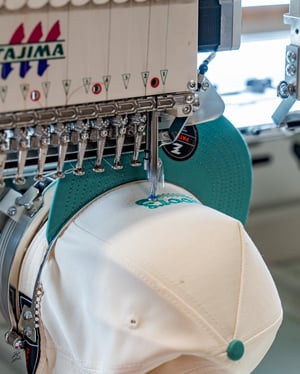
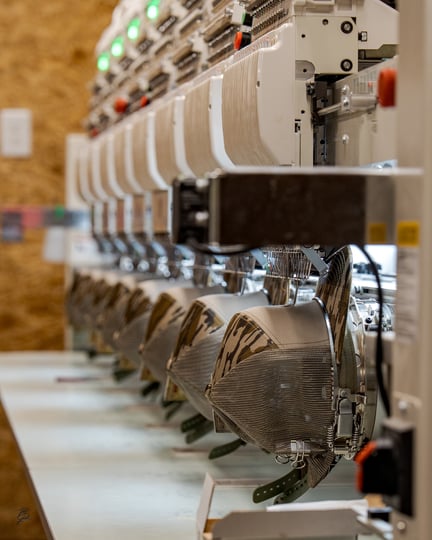
"Our current setup is a 2024 Tajima TMEZ-K1508C 8-head 15-needle machine. The 8-head setup gives us the production speed we needed while also allowing us to keep more work in-house instead of outsourcing.
A large portion of what we produce involves hats and corporate apparel, so being able to efficiently run larger quantities has made a huge difference in our workflow. It’s helped us improve turnaround times significantly while also giving us more consistency across every run.
As we continue growing, we definitely see ourselves expanding the embroidery department even further."
8. How have the Tajima machines performed for you in terms of speed, stitch quality, and reliability?
"The machine has been extremely reliable for us. Overall efficiency and workflow improved almost immediately after bringing embroidery in-house. The stitch quality has been very consistent, and having equipment we can rely on daily has made a huge impact on production.
The speed and consistency of the machine has allowed us to take on larger orders while still maintaining the quality standards we want tied to our brands."
9. Are there any features (like auto tension, ease of use, etc.) that have made a noticeable difference for your team?
"The biggest thing for us has honestly been the reliability and stitch quality. Having a machine we can trust every day removes a lot of stress from production.
One of the more surprising things after bringing embroidery in-house was how much more control we gained over every aspect of the process. We’re able to make adjustments quickly, test products faster, and maintain consistency across orders much more efficiently than when we outsourced."
10. How was your experience working with Hirsch Solutions during the purchasing process?
"Our experience with Hirsch Solutions was great from the beginning. Communication was fast, they were knowledgeable about the equipment, and the overall process felt very straightforward. At no point did it feel overly pushy or sales-focused. They genuinely wanted to make sure we ended up with the right setup for our operation."
11. How would you describe the training, onboarding, and ongoing support you’ve received?
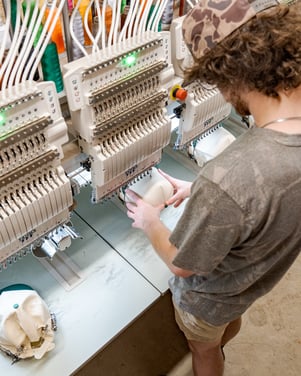
"The training and onboarding process was extremely helpful, especially transitioning from outsourcing embroidery into running production ourselves. They helped make the learning curve much smoother and gave us confidence operating the equipment early on.
The ongoing support has also been great anytime we’ve had questions or needed assistance."
12. What stands out most about working with Hirsch compared to other vendors you may have considered?
"What stood out most was the level of communication and support before and after the purchase. They understood that we weren’t just buying a machine — we were investing in a major part of the future growth of our business."
13. Can you share a specific moment, product launch, or order where your Tajima setup really proved its value? (high-volume drop, tight deadline, detailed design, etc.)
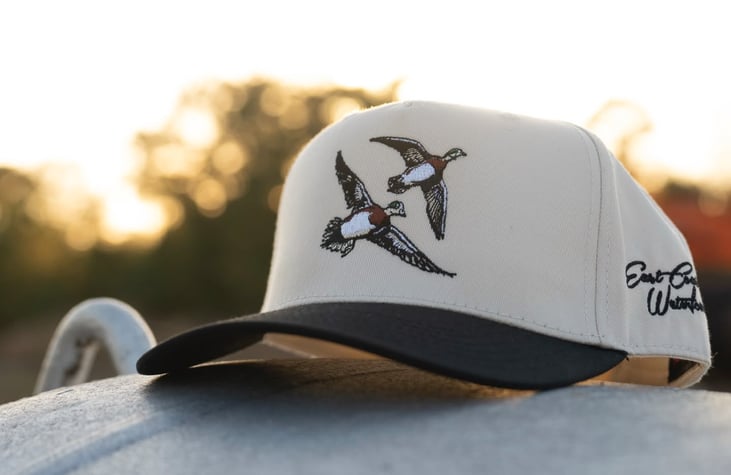
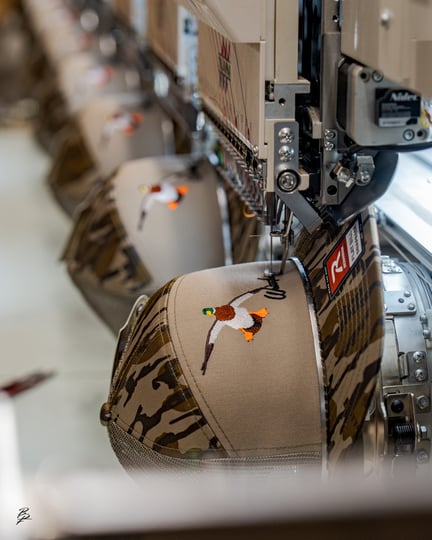
"A specific time when the Tajima TMEZ embroidery machine really proved its value was during the fall of last year when we were launching a large batch of new designs for East Coast Waterfowl. We had around 1,000 hats to produce, all featuring highly detailed embroidery of ducks and geese. These designs were especially challenging because of the amount of color variation, shading, and fine detail involved.
Thankfully, the Tajima handled the workload quickly and efficiently while maintaining excellent stitch quality throughout the entire run. The designs had extremely high thread counts and required a level of detail that would have been difficult to achieve consistently with most standard embroidery machines. This was not a project we could have confidently outsourced elsewhere. The capabilities of the Tajima TMEZ were a major reason we were able to successfully complete the job in-house and deliver the quality we wanted.
Overall, I have been extremely pleased with the performance and reliability of the machine. It has consistently kept up with the high production demands we have put on it while producing outstanding embroidery quality."
14. What made that moment impactful for your business or brand?
"What made the project especially impactful was our ability to produce these extremely high thread count designs efficiently and get them out to customers in time for the holiday rush. Without the speed and precision of the Tajima TMEZ, meeting that deadline while maintaining the level of detail and quality we wanted would have been very difficult."
15. How has investing in multiple Tajima machines changed your ability to scale production and grow your brands?
"Investing in Tajima completely changed the way we approach embroidery production. Bringing it in-house improved our production capacity, allowed us to take on larger customers and orders, and gave us much more control over quality and timelines.
Embroidery has become one of the biggest parts of our business and has played a major role in helping Birdshot Branding continue to grow."
16. Has bringing embroidery in-house helped improve margins, turnaround time, or overall control? If so, how?
"Absolutely. Bringing embroidery in-house reduced outsourcing costs, improved production efficiency, and allowed us to turn orders around dramatically faster than before.
More importantly, it gave us control. We’re no longer relying on outside production schedules or inconsistent quality. We can manage the process ourselves from start to finish."
17. How important has embroidery been in building out your apparel brands and identity?
"Embroidery has become a huge part of our brands, especially with hats and premium apparel. A large percentage of our business now involves embroidery, and it’s helped us expand further into corporate branding, custom merch, and larger-scale production.
It’s also helped position Birdshot Branding as more than just a custom apparel company. Having in-house embroidery capability allows us to offer a higher level of service and flexibility to our customers."
18. If you had to sum it up, why was investing in Tajima the right decision for East Coast Waterfowl?
"Investing in Tajima was the right decision because it gave us the ability to scale while maintaining the level of quality we wanted associated with our brands. It improved efficiency, increased production capacity, and gave us far more control over the final product and customer experience.
It wasn’t just about buying a machine — it was about investing in the long-term future of our business."
19. What would you say to someone considering adding multi-head Tajima machines to their operation?
"If embroidery is becoming a serious part of your business and you’re looking to scale while maintaining quality and consistency, it’s absolutely worth considering. For us, the reliability, efficiency, and overall control we gained made a huge difference almost immediately."
20. What’s next for East Coast Waterfowl, Birdshot Branding, and East Coast Angler?
"We’re continuing to grow all sides of the business while expanding our production capabilities internally. A big focus moving forward is continuing to grow Birdshot Branding, especially in corporate branding and custom merch.
We also plan to continue expanding our embroidery department as production demand increases."
21. How do you see your production setup evolving over the next few years?
"We definitely see ourselves continuing to invest into embroidery and production equipment as the business grows. Expanding the embroidery department and increasing in-house production capabilities is a major focus for us moving forward."
22. What are your long-term goals and personal vision for the business, and how do you hope your work will positively impact the local community over time?
"My goals with the Tajima embroidery machine are to continue running it successfully for years to come while expanding our production capabilities in the future with the addition of a single-head machine and another eight-head machine alongside the support of the Hirsch team. As our business continues to grow, we want to keep expanding both our custom apparel customer base and our East Coast Waterfowl brand by continuing to deliver products with the high-quality embroidery we are known for.
Quality has always been one of the biggest priorities for our business, both on the B2B side and within the East Coast Waterfowl brand, and the Tajima machine has played a major role in helping us maintain that standard. With the continued support, service, and expertise from the Hirsch team, we are confident in our ability to keep growing while providing customers with the level of detail and consistency they expect from us.
We are also excited to expand our services by bringing DTF printing in-house. We plan to partner with Hirsch again by adding an STS DTF machine so we can continue offering high-quality products while improving efficiency and turnaround times for our customers.
We truly appreciate the customer support, attention to detail, and overall partnership the Hirsch team has provided us throughout our growth. We look forward to continuing to work together and are excited to see what the future holds for our company."
.png)
Shark Creek Graphics started as a small side hustle in a backyard shed, helping the Combat Veterans Motorcycle Association® with patches, apparel,...
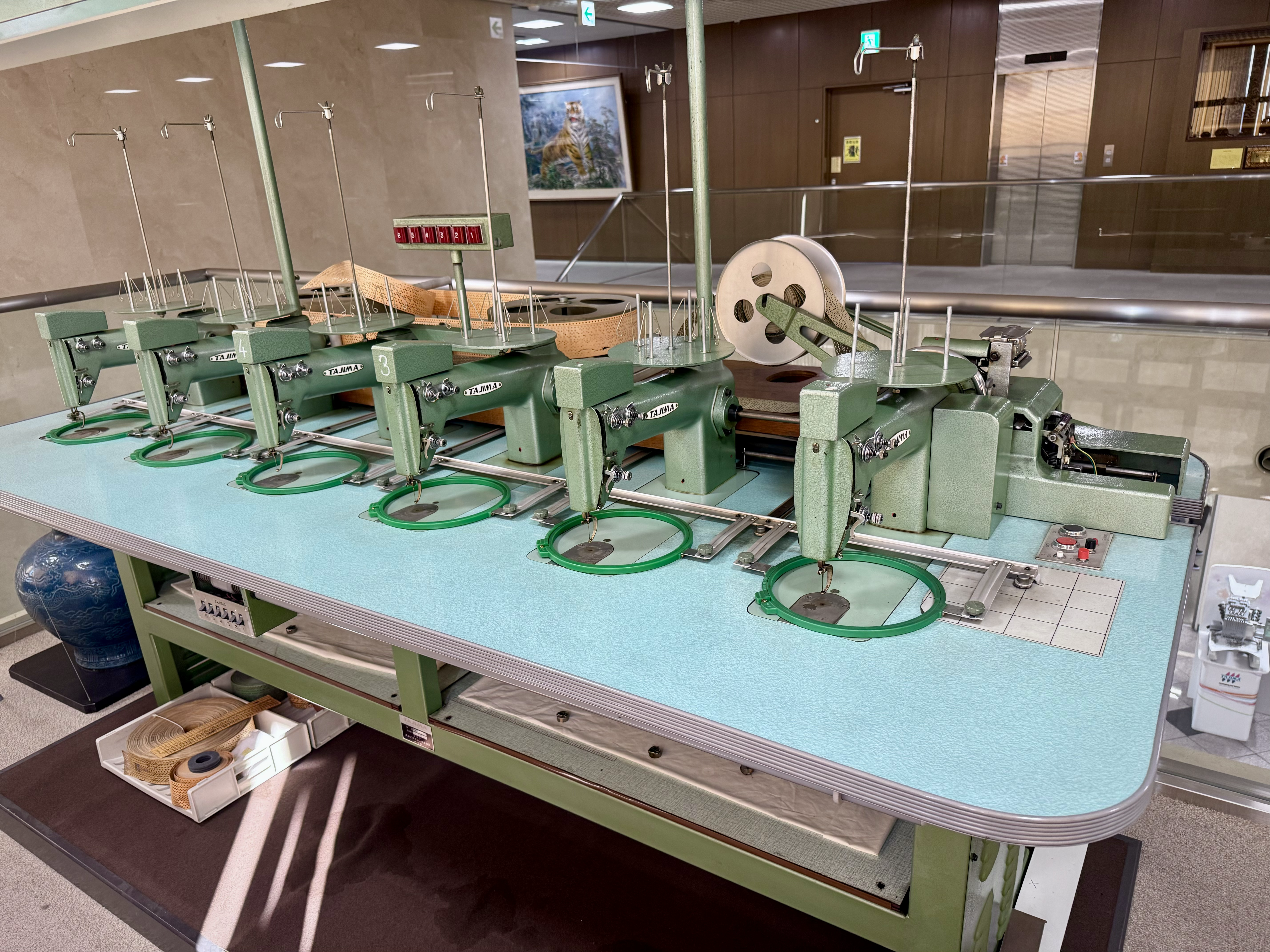
When our leadership team toured the halls of Tajima’s Nagoya HQ in October, one of the machines that held special significance was the TM-J106 (M/c...
We are excited to announce that Hirsch Solutions and Tajima will be setting up at Make-Ready 2026 at MADE Laboratory on Friday, June 12, 2026, at 501...